
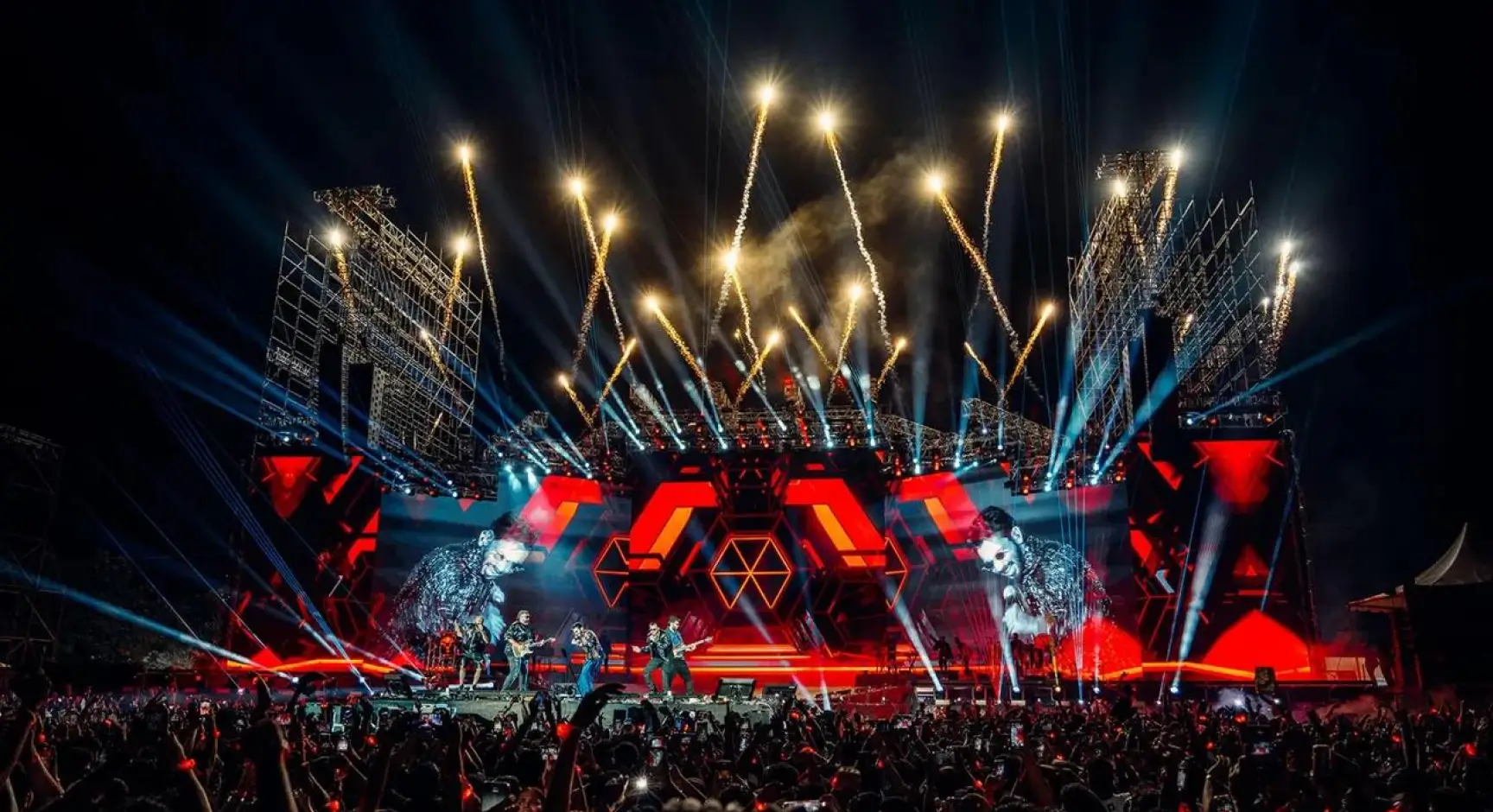
Next time you're at a concert, do this: for ten seconds, stop watching the artist and watch the screen behind them instead. The colors shifting on the drop. The visuals hitting exactly on the beat. The way the whole stage seems to breathe with the music. None of that is on autoplay. Someone backstage, or off to the side of the crowd, is driving it live, in real time, the same way the DJ is driving the sound. That person is the VJ, and almost nobody in the crowd knows their name.
VJ stands for video jockey, and yes, the name is a direct nod to the DJ. Where a DJ selects and blends the audio, a VJ selects and blends the video. Think of them as running a second, parallel show that most of the audience feels more than they consciously notice.
The term actually goes back further than you'd guess. VJing traces back to the New York club scene of the 1970s, way before MTV made "VJ" a household word for a totally different job (hosting music video countdowns). The live-performance version of VJing never went away. It just moved from clubs into arenas, festivals, and full concert tours, and it got a lot more sophisticated along the way.
Here's the part that surprises people most: a VJ isn't just pressing play on a pre-made video, at least not entirely. How much is live versus pre-programmed varies a lot by production, some shows run heavily scripted visual cues timed to a fixed setlist, while others leave the VJ reading the room and reacting in real time, the same way a DJ reads a dance floor and decides whether to drop the next track now or hold it for thirty more seconds. If the artist milks a moment longer than rehearsed, the VJ has to stretch the visuals with them. If the crowd goes wild on an unplanned encore, someone has to have visuals ready for that too. Either way, it's a live discipline; just nobody's looking at the person doing it.
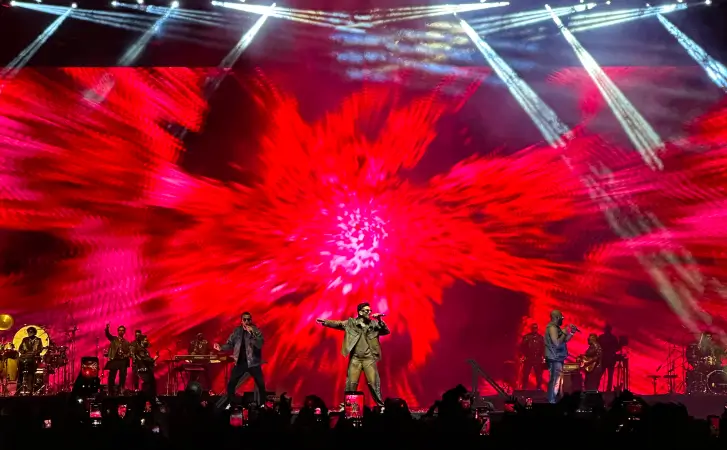
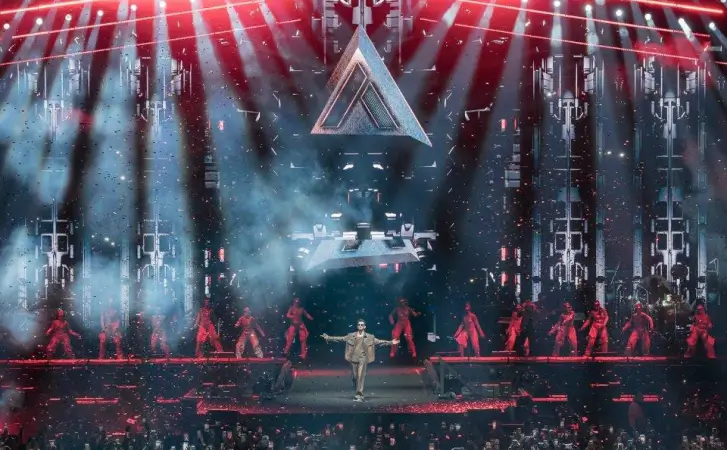
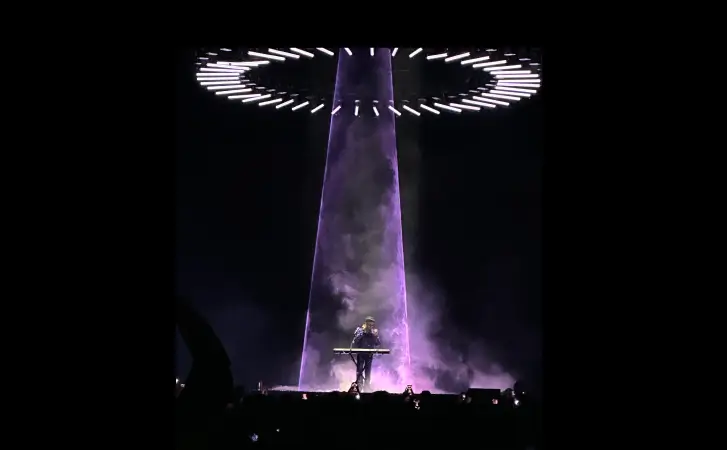
The job splits roughly into two halves: the prep and the live show.
Before a single ticket is sold, a VJ (or a team, on bigger tours) is building a visual library for the concert. That means custom animations, footage, abstract effects, and sometimes 3D content built specifically to wrap around the shape of the stage or the LED screens being used. This part looks a lot like any other creative production job: storyboarding, rendering, revisions, and client approvals.
Then the tour starts, and the job changes completely. During the actual show, the VJ sits at a control station with a laptop, a couple of screens, and often a MIDI controller or other control surface. From there, they're triggering clips, blending between them, layering effects on top, and adjusting everything on the fly based on what's happening on stage. No two nights are identical, even on the same tour, because no two crowds or performances are identical either.
This is the part that looks like magic from the crowd but is really just a mix of preparation and quick reflexes.
Some of it is set up in advance. VJ software like Resolume can read the tempo of a track and use that to keep visual loops locked to the beat automatically, either by having the VJ tap along to set the BPM manually or by syncing to a timecode fed in from the show's audio setup. If a song is 128 beats per minute, the software can be told to cut or pulse the visuals in time with that, without the VJ manually hitting a button on every single beat.
But the more interesting sync is the human kind. A VJ is watching the setlist, listening for a key change, a drop, or a quiet acoustic moment coming up, and reacting to it live, the same instinct a good lighting designer has for when to hit the strobes. It's part software, part muscle memory, part just knowing the song cold after weeks of rehearsal.
If you want to actually see this in action rather than just read about it, watch for a VJ's control screen next time a tour posts behind-the-scenes footage. Seeing the raw interface next to what's happening on the big screen makes the whole job click in about ten seconds.
It's easy to assume the visuals are just decoration, something nice behind the artist that doesn't change much if it's a beat late or a shade off. Ask anyone who's been to a show where the visuals genuinely landed and they'll tell you that's not true at all. A well-timed visual moment is the difference between a song that's good and a song that gives you actual chills. Concert visuals are doing real emotional work, they build anticipation before a drop, they slow the room down for a ballad, they make an arena the size of a stadium feel intimate for thirty seconds.
VJs also carry something a lot of the audience never thinks about: risk. There's no retake in a live show. If a cue is missed or a clip stutters in front of forty thousand people, there's no editing it out afterward. That pressure is part of why the good ones are so quietly respected within the touring industry, even while staying completely invisible to the crowd.
And their fingerprints are all over shows you've probably already seen, even if the credits never mention them by name. It's the kind of behind-the-scenes craft Pixadoo brings to its own concert work, including tech direction on tours like Amstel Anirudh XV.
If this has you curious about trying it yourself, many VJs build their live sets in software like Resolume, which is built specifically for real-time video mixing, or TouchDesigner, a more advanced, node-based tool that lets VJs build fully custom, reactive visuals from scratch rather than just mixing pre-made clips. Resolume offers a watermarked demo to try before buying, and TouchDesigner has a free non-commercial license (paid work requires a paid license). PIXMAP sits in a different part of the pipeline entirely: instead of live mixing, it's used before the show to map content precisely onto large-scale LED setups and generate the production files that feed into media servers like Resolume, Pixera, and Disguise. It's less a VJ performance tool and more the groundwork that makes complex LED shows possible in the first place. Communities like r/vjing on Reddit are worth a look too if you want to see what other people are building before you dive in yourself.
The VJ is one of the important live roles in modern concert production. No autoplay, no safety net, just someone reading the room in real time and making a stadium full of people feel something they can't quite explain. Next time you're at a show, take that ten seconds and actually watch the screen. You'll start noticing who's really running it.